

By Enock Musaana, LGT Impact Fellow at Financing Alliance for Health (FAH), Zambia
In global health, the distance between good intentions and measurable impact is often vast. We champion universal health coverage, yet the engine that determines whether those ambitions succeed is frequently invisible: health financing. It shapes how resources are mobilised, directed, and ultimately delivered to primary healthcare (PHC) and community health systems.
I am Enock Musaana, Senior MERL Fellow at the Financing Alliance for Health (FAH). Through my experience in health systems, I’ve learned that data alone cannot transform systems, but data built on trust can. A MERL professional is not simply a custodian of statistics; they are a facilitator of relationships, credibility, and informed decision‑making.
MERL is a relationship, not just a registry
Technical rigour means little without human connection. Early in my fellowship, I realised that “data integrity” rests on collaboration, not software. By developing strong relationships with the Country Engagement and Partnerships teams, I shifted from being a distant “checker of boxes” to a strategic ally.
This shift crystallised during a regional boot camp where I facilitated MEL sessions designed to empower teams to measure their own impact. What began as a lowlight, navigating a new organisation’s pace and processes, became one of my most meaningful successes. Trust turned technical work into shared ownership.
The power of the embedded advisor
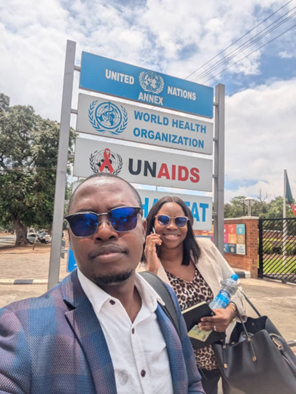
A major turning point came during the FAH CEO Mission in Zambia. It catalysed a shift from a traditional consultancy model to an embedded advisory approach. Today, I serve as a Technical Advisor within Zambia’s Ministry of Health M&E unit. Being physically present allows me to design MERL systems with the nuance, context, and government ownership that remote work simply cannot replicate.
Supporting Sierra Leone remotely highlighted this contrast: without proximity, influence becomes limited. Embedded advisory ensures that PHC outcomes are not only tracked, but owned, strengthened, and sustained by government counterparts.

From data mining to data cockpits
When I began, MERL work was heavily reactive, driven by “data mining” to meet donor reporting needs. Today, we operate proactively through organisation-wide data cockpits, leading to dynamic dashboards that transform raw numbers into actionable insights.
Through Impact Sprints across FAH countries, we aligned FAH’s work with donor commitments and strengthened adaptive management. These shifts ensure that every unrestricted and restricted funding stream is tracked with precision, accountability, and strategic insight.
The rhetoric of impact: Logos, Ethos, Pathos
A surprising but essential part of MERL is persuasion. Moving decision‑makers requires more than charts; it requires rhetoric. I often rely on Aristotle’s classical pillars:
- Logos (Logic): Presenting data that speaks directly to donor rationale.
- Ethos (Credibility): Designing frameworks aligned with established principles and policies.
- Pathos (Emotion): Demonstrating the human and societal value behind the numbers.
This balance proved crucial while designing the M&E framework for the Judith Nelson Foundation (JNF) program, which ultimately secured grant approval.
Balancing an expanded portfolio
Fellowship roles rarely remain static. Mine evolved into a hybrid of MERL leadership, government advisory, and fundraising support. To manage this workload without sacrificing quality, I invested in data fluency support for staff. When teams can interpret and use data independently, MERL becomes an enabler rather than a bottleneck. Functional country‑level systems require teams that are not just data‑literate, but data‑fluent.
The learning agenda never ends
My fellowship journey has spanned resource mobilisation, board-level reporting, and the development of FAH’s organisation-wide Learning Agenda. As these strategies become institutionalised, one question remains central:
How can data-driven transparency transform how governments and donors invest in primary healthcare across Africa?
The answer lies in adaptive management, treating systemic change not as a destination, but as a continuous process. When organisations embrace a culture of learning, transparency, and improvement, every dollar mobilised becomes a lever for stronger, more resilient health systems.
Contributing to organisational and donor success
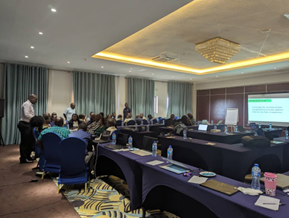
Throughout the year, I also supported donor reporting, MEL-related sections of proposals, and internal learning initiatives, all of which strengthened FAH’s ability to communicate results and secure continued support. One highlight was leading the M&E framework design for the newly approved Judith Nelson Foundation (JNF) program. Being involved from concept to approval demonstrated how strong evidence and clear logical frameworks can unlock critical resources for health systems.
Lessons from beyond the workspace
Zambia offered more than professional experience; it offered moments of grounding and reflection. From the serenity of Lake Bangweulu to the refreshing beauty of Mumbuluma Falls and the wildlife at Chaminuka, these moments reminded me to pause, appreciate the journey, and stay connected to the purpose behind the work.

Looking ahead
As I move into the last phase of my fellowship, my priorities include further strengthening MEL systems, contributing to FAH’s Annual Impact Report, and deepening learning activities with the Evidence, Policy, and Advocacy team. Most importantly, I carry forward a renewed commitment to evidence as a catalyst for change.
This fellowship has affirmed my belief that strong health systems are built not only on funding and strategy, but also on the power of learning, continuous improvement, and data-driven decision-making. I am grateful for the opportunity to contribute to this mission and excited for the work ahead.