
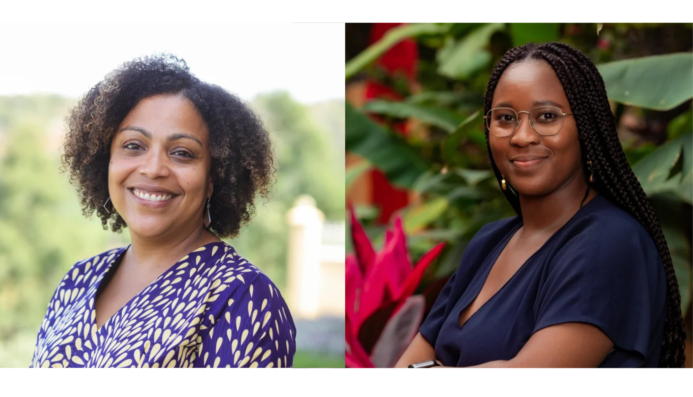
Testimonial by Amp Health: Insights from fellow, Fatouma Sokona and her line manager, Rihlat Said Mohamed
Together, Fatouma and Rihlat reflect on the LGT Impact Fellowship as a shared journey and how that strengthened Amp Health’s systems. This joint interview reflects on how the fellowship added value to Amp Health during a period of organisational growth, while giving Fatouma, a fellow of the 2024 cohort, space to contribute meaningfully, strengthen systems, and clarify her long-term commitment to impact work in Africa.
What led Amp Health to host an LGT Impact Fellow, and what were you looking for at that time?
Rihlat:
Amp Health has partnered with the LGT Impact Fellowship for many years, and it’s a collaboration we truly value. Over time, it has brought in exceptional talent, people who have contributed meaningfully to our mission and, in several cases, continued working with us beyond their fellowship. Fatouma is the fifth fellow Amp Health has recruited through the programme.
Our experience with the fellowship has been consistently positive. The value Fellows bring has been significant enough that, in the past, we have permanently employed three Fellows after their engagements ended. In Fatouma’s case, given the depth and quality of her contribution, we also decided to extend her fellowship for an additional year, which speaks both to her impact and to the importance of the work she is doing within the team.
When we decided to host a fellow in 2024, Amp Health was in a phase of significant growth. We were expanding the number of programmes we support and the diversity of partnerships we engage in. For the Country Support function that I lead, which focuses on relationships with governments and funders, programme implementation, and managing in-country teams, this growth meant we needed to further strengthen our systems and processes to keep pace with the scale and complexity of our work.
I was looking for someone who could help enhance these systems, bring strong programme management and interpersonal skills, and operate effectively in dynamic environments. Because we were also expanding our footprint in French-speaking countries, being bilingual and culturally attuned was essential. Fatouma brought that rare combination. From our first interaction, she stood out for her determination, proactive mindset, and warmth. She is a genuine self-starter, thoughtful, and highly collaborative, which are qualities I deeply value in my team.
Fatouma, what motivated you to apply for the fellowship and join Amp Health?
Fatouma:
I applied for the LGT Impact Fellowship because I wanted to deepen my contribution to systems change in Africa. I have always been passionate about leadership and how it can transform people and institutions, and Amp Health offered a unique opportunity to explore that passion within public health and social impact.
I was looking for a hands-on experience where I could meaningfully contribute to an organisation making a real difference on the continent, while also challenging myself to grow. The fellowship felt like the right space to bring together my interests in leadership development, programme coordination, and management. Joining Amp Health as a Country Support Coordinator was a natural fit, especially given the strong alignment between its mission and my own values around empowerment and sustainable impact.
How did Fatouma’s role take shape once she joined the team?
Rihlat:
Within the team, Fatouma played a central role in strengthening implementation processes and improving coordination across functions. She developed practical tools that made our work more efficient and cohesive, and she provided direct support to our Management Partners in-country.
Her work helped ensure that country teams had structured systems, clear guidance, and the tools they needed to manage programmes effectively, while also building their confidence and capacity to operate more autonomously. She was deeply involved in supporting programme delivery, but also in strengthening the foundations that make that delivery sustainable.
Fatouma, how did this experience compare to your previous roles?
Fatouma:
It was very different, particularly because the fellowship was fully remote. Despite that, I was still able to create tangible impact and support teams across multiple countries. Working virtually pushed me to adapt to diverse contexts, manage a wide range of stakeholders, and build strong relationships without meeting people in person.
In my previous roles, much of my work in organisational change and leadership development was in the private sector and largely face to face. This experience allowed me to apply those same skills within the impact sector, supporting Ministries of Health and contributing to systems change from a distance, while still feeling closely connected to the mission and the people behind it.
From your perspective, Rihlat, what impact did Fatouma have on the organisation?
Rihlat:
Her impact has been both structural and cultural, with clear and lasting effects on how our implementation and partner support function operates. She contributed significantly to optimising programme performance monitoring tools, refining work planning processes, and strengthening documentation and reporting systems.
She also provided invaluable support to our Management Partners in managing complex programmes of work and implementing internal tools effectively. Through this, she helped ensure consistently high-quality outputs across our programmes. Beyond the technical contributions, she brought a strong spirit of collaboration and adaptability that aligns closely with our culture of accountability and continuous improvement.
Fatouma, which projects or contributions stand out most for you?
Fatouma:
One project I’m particularly proud of was co-leading the coordination and analysis for the Adolescent Health Scoping Mission in the Democratic Republic of Congo. It brought together ministries, UN agencies, NGOs, youth associations, and community leaders, many of whom don’t often work closely together. At first, navigating the different perspectives felt complex, but it revealed just how much passion and expertise already existed within the system.
I supported interviews, guided data collection, and helped synthesise insights that could inform future investments and programme design. Seeing how those findings could influence national strategies was incredibly meaningful.
I’m also proud of my contribution to strengthening Amp Health’s internal systems. Within the Country Support Department, I helped design and formalise the Management Partner Lifecycle Process, mapping every step from partnership signing through recruitment, onboarding, management, and offboarding. It was largely behind-the-scenes work, but it brought clarity and consistency across teams and ensured that the people leading change within Ministries of Health were well supported.
How did the fellowship shape your learning and career direction?
Fatouma:
The fellowship deepened my understanding of what sustainable impact really means. It’s not just about designing programmes or achieving quick wins, but about strengthening the people and systems that make change last.
One aspect of the experience that has been especially meaningful is that Amp Health recognised the value of my contribution and decided to extend my fellowship. I was genuinely excited by that decision because it allows me to continue the work I helped lay the groundwork for, deepen ongoing initiatives, and see systems and processes mature over time. That sense of continuity has been incredibly motivating.
Professionally, I learned how to drive impact in complex, multi-stakeholder environments and how to balance structure with flexibility. One of my most meaningful learnings was experiencing intentional, supportive, and transparent management. Seeing how trust and consistent guidance unlock individual and team potential had a lasting influence on how I think about leadership.
Personally, I learned to embrace uncertainty with patience, value progress over perfection, and stay grounded in purpose even when the work is challenging.
Would you recommend the fellowship to others?
Rihlat:
Absolutely. Hosting an LGT Impact Fellow is a powerful way to strengthen organisational capacity. Fellows bring strong analytical rigour, strategic thinking, and fresh perspectives, while also contributing positively to organisational culture. Our experience, including extending Fatouma’s fellowship and permanently hiring former Fellows, reflects the long-term value the programme can create.
Fatouma:
For me, the fellowship was transformative, grounding, and empowering. It clarified the kind of contribution I want to keep making: working where purpose meets execution, and where ideas are translated into systems and relationships that create lasting change.