
Power to the People
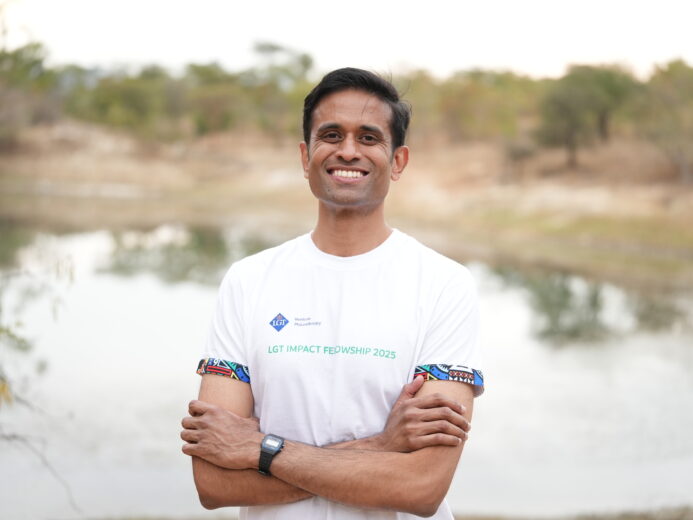
By Senthil Balasubramanian, LGT Impact Fellow at Kenya Wildlife Conservancies Association (KWCA), USA
“Living Nature, Living People” – this vision laid out by the Kenya Wildlife Conservancies Association (KWCA) is what drew me to the organization and the LGT VP Impact Fellowship. As a former founder in the climate tech space, I couldn’t resist the allure of this exciting version of a future where communities sustain themselves through nature-based enterprises and therefore also become invested in safeguarding nature. A version where entrepreneurship happens not in incubators and accelerators but on the open savannah, where founding teams are born not in university labs but in local communities, where the end impact might not be more unicorns but more lions and giraffes. That’s a future the David Attenborough fan boy in me couldn’t resist.
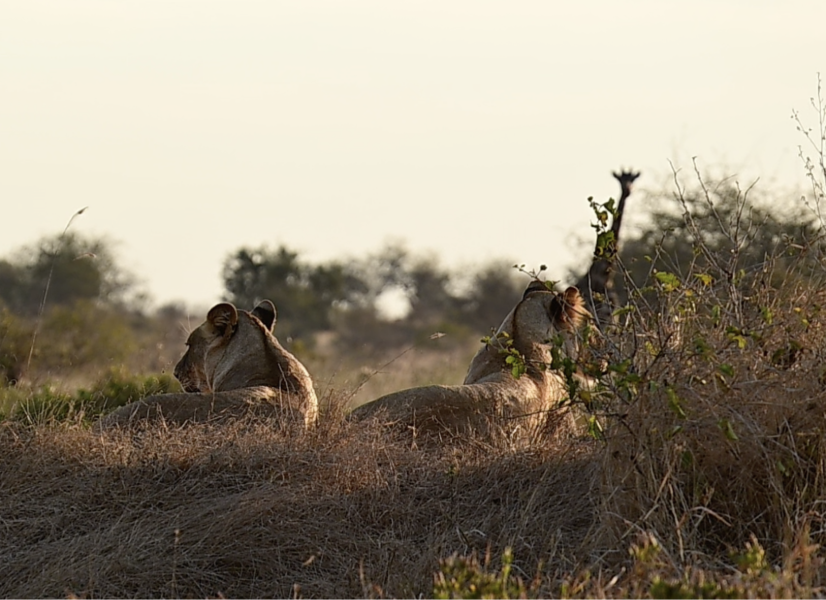
A watchful giraffe keeps a close eye on the lionesses in the Tsavo. Photo credit: Alex Kamweru
And that future is already here. In the beating heart of the Maasai Mara ecosystem in southern Kenya lies the conservancy of Mara Naboisho, the poster child for the endgame for community-led conservation. The community there manages 22,500 acres of land for conservation – the greatest asset on this land is the thriving wildlife that brings in $2 million every year in tourism revenue. The community takes care of the wildlife, which in turn provides for the community. And Mara Naboisho is just one of 240+ communities dispersed across the length and breadth of Kenya that between them manage over 10 million hectares of land for conservation.
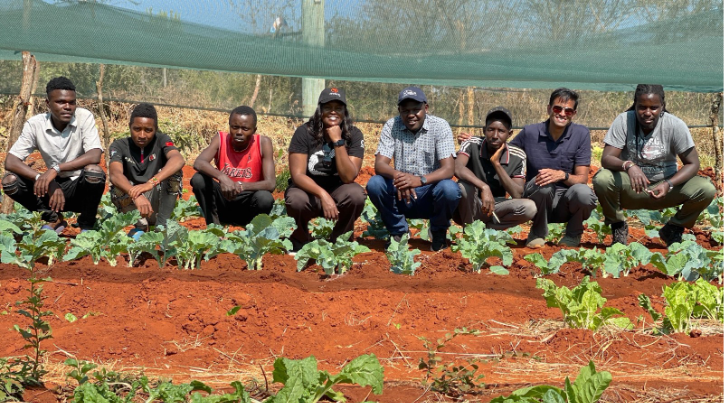
KWCA team with the youth-led Taleo sustainable agriculture enterprise team. Photo credit: Alex Kamweru
What I discovered during my time on the ground visiting these conservancies is the variety of business models that are mushrooming. In Lumo conservancy in the Tsavo landscape, I met Taleo, a youth-led organization that has launched a sustainable conservation agriculture enterprise that is on the verge of profitability. In Mgeno conservancy, I saw how carbon revenues have financed the construction of much-needed restrooms in the local school and expansion of critical hospital facilities. Meanwhile, in Mbokishi, I met the women now running their own beekeeping and honey production facility. When one of them said “This is the first time in my life that I am earning my own income”, I wasn’t sure what was stronger – the pride in her eye or the goose bumps on my skin.
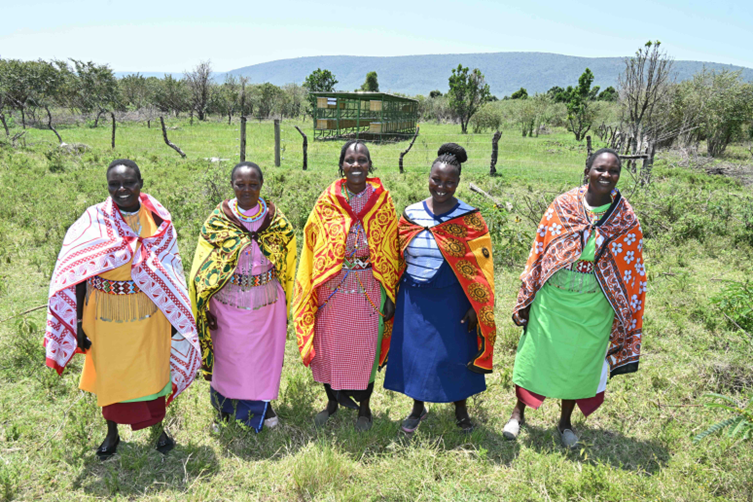
The women-led beekeeping enterprise in Mbokishi conservancy in the Mara. Photo credit: Alex Kamweru
The list doesn’t stop there. In partnership with the African Nature-Based Tourism Platform, KWCA worked with member conservancies on promising business plans. The result was a sort of highlights reel of entrepreneurial hits: a high-end ecotourism project in Meibae Conservancy with an attractive 5-year payback; a women-led ecotourism opportunity in Kikesen River Conservancy with a 5x ROI; an innovative edutourism business in the geologically unique Sinibo Geo Park that will unlock $1 million in annual revenue; a pioneering 100% pastoralist-owned ecotourism project in northern Kenya’s biodiversity-rich Shurr conservancy that will conserve 425,000+ hectares while generating a 50% operating margin. If only these businesses had a platform like the MIT $100K to pitch their plans, I have no doubt they will be surrounded by investors writing them cheques.
This is what can happen when the potential of communities is paired with the power of entrepreneurship. My fellow Fellow, Joyce Makau, has written eloquently about the central role of communities. As she says, “when communities lead, conservation moves beyond projects; it becomes a way of life”. And when that way of life is sustained through real income from flourishing enterprises, that means jobs, schools, hospitals, financial independence, and generational transformation.
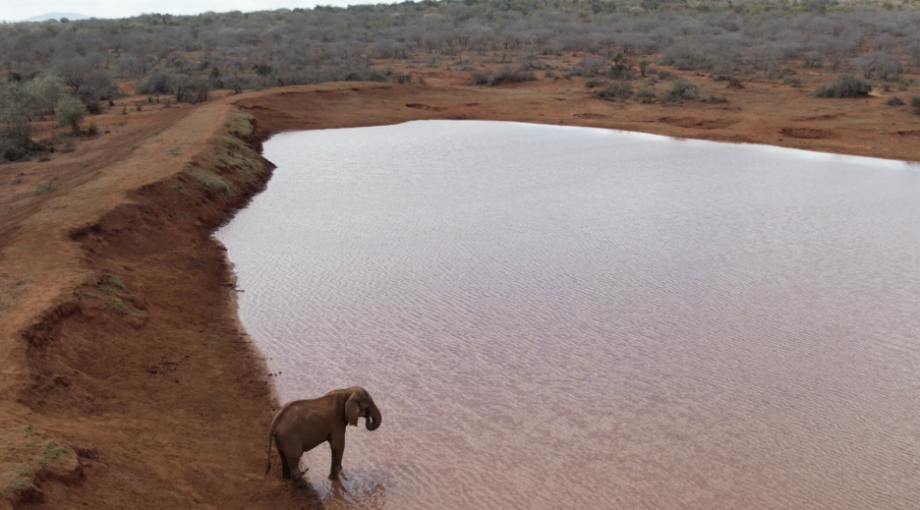
Elephant by a water pan in the iconic red soils of the Tsavo. Photo credit: Alex Kamweru
If that sounds a bit romantic, let us keep in mind that nature is the source of all resources humans know and need. In a future where the growth of AI will place massive stress on energy and water resources, conserving nature will not be a feel-good philanthropic initiative, but a must-do existential need. Whether the rest of the world recognizes the gravity of the situation or not, the communities of Kenya – and indigenous peoples all across Africa and the rest of the world – are on the frontlines, carrying an enormous and unfair burden to safeguard our global future. I am grateful to LGT VP for the fellowship opportunity that gave me the chance to witness and support the tireless work of these unsung heroes.